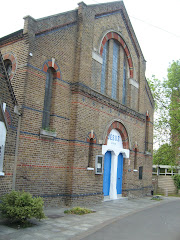
James Harvey 02


Because he was employed by Henry Bardwell and had no fixed convictions of his own when he came to London, Harvey attended the old Surrey Tabernacle in Southwark along with Bardwell and so sat under the ministry of the leading Strict Baptist of his day, James Wells (1803-1872). Hampshire born, Wells had grown up a godless man but following an illness in his early twenties he came under deep conviction and was eventually converted through Hyper-Calvinist Christians. He himself was a gifted preacher and came to have a large and very loyal congregation (second only in size to Spurgeon's - with whom he tangled in the pages of the Earthen Vessel).

Harvey attended Surrey Tabernacle for some 15 years and became convinced of the doctrines of election and reprobation. He tried to convince others about these truths, says his son, but he himself did not think he was was elect. He was “unhappy and a stranger to the peace of God that passeth understanding”. He was clearly not finding Wells' ministry a blessing to his soul.

On December 5, 1848, the first purpose-built Baptist chapel in central London opened - Bloomsbury Chapel. The first pastor there was William Brock (1807-1885) the later abolitionist and biographer. Originally a watchmaker, Brock trained at the Baptists' Stepney College before spending 15 years working in Norwich. James had heard him there in the late 1830s and had not been impressed. However, he took the decision to attend for 6 months, to “give the minister and the doctrines which should be preached a fair trial”. “The first month had not passed away" he came to write "before I found what I had long been seeking in vain. I was able to rejoice in God through our Lord Jesus Christ.” He began to keep a diary and one of the first entries in it, made at 7 am on Saturday, December 30th, 1848, related his conversion.
He wrote these words

This has been the most remarkable night of my existence, and the most precious. Not one wink of sleep have I had during the whole time, from eleven o'clock last night till seven this morning. Last night, as has been my custom recently, I noted down the most important circumstances which occupied my mind during the day; and having had many very important and apparently difficult matters to arrange when I arose in the morning, which during the day were arranged in a way and manner much more satisfactory than my partner and I had been able to conceive of, I felt impelled to record my gratitude to God for so marked (as it appeared to my mind to be) a manifestation of His over-ruling all things to accomplish in the end His own purposes.

On retiring to rest I committed myself to God in prayer, with more freedom of speech than usual; and in pleading for the pardon of sins, and realising the bare possibility of their being forgiven and blotted out for Christ's sake, I felt overwhelmed and could not say another word. In bed, I desired the Lord to have mercy upon me and accept of my imperfect gratitude for His abundant mercies and from that time till 4 am my mind was occupied on matters of business with which I had been concerned during the day, and as I appeared to be at an end of my musings, knowing that today is our stock-taking, and that I shall be engaged in the warehouse till twelve o'clock at night, I again tried to go to sleep, and breathed a desire (which, if it be the Lord's will, may He grant) that He might enable me to be a benefit amongst those under our own roof both for their temporal and spiritual welfare. When in a moment I was arrested by an idea, and these words were fixed in my mind “Like as a father pitieth his children, so the Lord pitieth them that fear Him.' As a father! - 'as a father pitieth his children.' Never did I realise the pity and mercy of God in such a sweet and endearing light. I could but repeat, 'As a father pitieth'. Seest thou a father embracing his son? Seest thou a father whose son is in trouble, whose son is in danger? Seest thou a father bestowing his riches and honour on his son in all the love of his heart? So, even 'the Lord pitieth them that fear Him'. A man may pity a faithful dog, a favourite horse; but as a father pitieth his children.' While lost in admiration in the thought, came one more precious still. 'Because you are children, God hath sent His Spirit into your heart Crying, Abba, Father.' 'God my Father' in this sense, and with these endearing words, can it be to me? When, lo! 'If children, then heirs, heirs to God and joint heirs with Christ.' This was too much for my heart; my only language was, Oh, for faith to believe!' - and I could not possibly restrain my tears. I could only cry, 'Lord, help! Can it be my portion?' And I continued with this threefold text in my mind adoring its beauty though its blessedness seemed far too great for me; when again: 'Can a woman forget bet sucking child, that she should not have compassion on the fruit of her womb? Yea, they may forget, yet will not I forget thee.' I laid thus for some minutes, for my heart was full to overflowing, and enquired 'What does this mean?' Then came as an answer: 'The love of God shed abroad in the heart.' Then followed: 'God so loved the world that He gave His only begotten Son, that whosoever believeth on Him should not perish, but have everlasting life.' The words 'everlasting life' seemed fixed in my ears. There came as a climax: 'I have loved thee with an everlasting love, therefore with loving kindness have I drawn thee.' I could hardly repeat the words. Then came back the thought, 'As a father pitieth,' but I could not repeat the words;' God, my father, who hast loved me with such a love,' I could not say them for several times trying. The thought returned: 'The love of God shed abroad in the heart,' and 'God manifesting Himself to me as He doth not unto the world.' I remembered that I had pleaded with Him for this, and it appeared as an answer to prayer. I then enquired, and do so now I am writing, What is all this that is done ? Is it not to prepare one for some coming trial or difficulty? And my answer from my heart was Come sickness, poverty, peril or death, I can meet them all with the love of God shed abroad in my heart by the Holy Ghost. I resolved to write it all down, if God enabled me, as soon as I arose ... If this which I am writing ever be read by any other being, I pray that he may experience the blessedness which I this morning, from the hours of four till seven o'clock, have been made to feel.
The fatherhood of God was one of the truths that he particularly warmed to and continued to emphasise throughout his life.

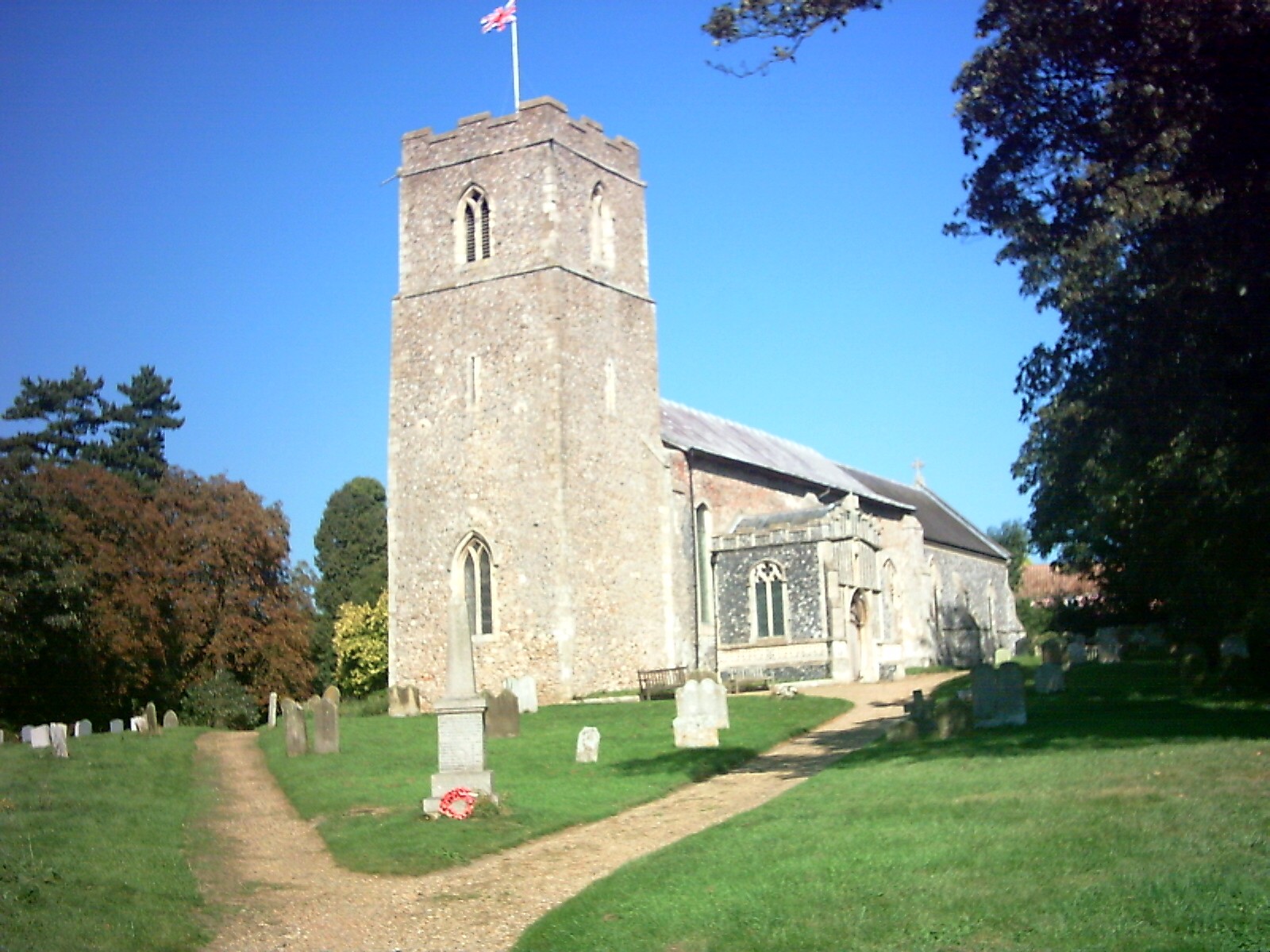
James Harvey 01

I came across the name of James Harvey (1816-1883) in the records for the church. Harvey lived in Hampstead and was involved in providing funds for a Baptist church there and the building we still use today in Childs Hill. In 1900 his son, a C of E Vicar, wrote a little biography which I have recently been consulting. Let me tell you his story.

Part 1
James Harvey was born in Badingham, in Suffolk (not far from Framlingham). He was the son of a farmer. He was born on May 16, 1816. Both parents were good living people if nothing more. James Harvey was the youngest of seven and the second son. He was known to the family as "Little Jems". He was educated first in the village dame school, then in Haveningham and finally in Framlingham.
Although his family was no doubt a good influence, sadly, the rector at the parish church (St John the Baptist, see pic) was hopeless and had no interest in teaching the way of truth. A new and better rector did come later on but by then Harvey was ready to leave for London where he was to make his fortune. His one positive experience of something better came when he was around 10 or 12 and a woman Methodist preacher came and preached on the village green.
On November 2, 1832, Harvey travelled to London on the Suffolk coach. He came to work in a warehouse at the bottom of the old Holborn Hill (where the Holborn Viaduct is now). His employer was a High Calvinist called Henry Bardwell. He dealt in woollen and cotton goods and such like, wholesale and retail. James started as a Junior assistant earning £12 per annum. That soon rose to £20 then £32 then £40. Back home his parents were in financial difficulties and he not only paid his outstanding school fees bu continued to send them help in their various needs.
After 5 years in London James became a Junior partner and then, when Mr Bardwell died in 1845, he became joint head of the company alongside his contemporary Joseph Bartrum. In this period James had saved up some £2,500 from his earnings. Bardwell also left him a thousand in his will.
Harvey's son later commented that the secret of his father's success was twofold. Firstly, James Harvey loved hard work. He had good health and did not take long holidays throughout his life. He was not obsessed with money. He was able to relax too. He liked to read "books of gristle" and liked foreign travel. He loved work for its own sake but was also driven by a strong sense of duty. The other factor was the high principles of conduct that he espoused even before he was eventually converted."Patient continuance in well doing" was his motto text often quoted (see Romans 2.7). Early on in message entitled "What traits of character are most desirable in a business man?" He spoke about these important character traits.
1. A proper degree of self-respect. Business is not all about profit and loss. Even tradesmen are capable of higher feeling.
2. Honesty. This must hold an important place. The golden law must be recognised. Honesty the best policy.
3. Persevering industry. He drew an interesting analogy from God upholding the universe to the need for business men to persevere in their task.
4. Clearness of purpose.
"Virtue and industry shall never go unrewarded" he said is one of God's laws.
Here was a very moral, church going man seeking to do what was right. However, as we shall see there was still more to learn and to experience.

Past ministers

Here is some information about past ministers of the church.
1. William Thomas Rickard (1837-1896)
Born Pennycross, Devon.
Founder and first pastor. Minister 1865-1894.
Previously at Hunton Bridge, Herts and Heath Street, Hampstead.
Married to Mary S Rickard. Three children including daughters Mrs Moore and Emily.
Lived in Homelea, The Ridge.
2. J(ames) Sylvester Poulton (1861-1942)
Born Dalston, London.
Studied Spurgeon's Pastor's College.
Second pastor. Minister 1894-1928.
Previously at Winslow and Cote.
Married to Emily Poulton. Six children (Percy, etc).
Lived in Fernleigh, Avenue Villas.
3. Ernest Kennard Alexander (1885-1956)
Born Newport, Monmouthshire.
Third pastor. Minister 1928-1953.
Previously a missionary in the Congo then briefly minister at Highams Park.
Married to F Alexander (nee Clare). A first son died in the Congo. There was also a second, F H Alexander.
Lived in Crewys Road and retired to Nant Road.
4. Leslie Wright (d 1990)
Born ?
Fourth pastor. Minister 1954-1961.
Subsequently at Netherton (61-68?), Potters Bar (69-76) and Clacton (82-90).
Married with children.
Lived in Crewys Road manse.
5. John Lionel Pretlove (b 1939)
Born South West London
Studied Spurgeon's College
Fifth pastor. Minister 1963-1970.
Subsequently ministered in Sheffield then America (Criswell Seminary, Dallas)
Married to Rosemary Violet Wigan from the congregation. Two daughters born while in Childs Hill (and later a son). Later remarried following Rosemary's death.
Lived in Crewys Road manse.
6. Anthony Sandys (d 2007)
Sixth pastor. Minister 1971-1975.
Subsequently involved in various churches and various occupations.
Married to Joy Sandys. At least one child.
Lived in Crewys Road manse.
7. Mark P Sharman (b 1949?)
Studied Trinity, Bristol
Seventh pastor. Minister 1976-1981.
Subsequently ministering in Newcastle. Married to Sandy Sharman. Two children while here, one later.
Lived in Crewys Road manse.

Mother church


This is Heath Street, Hampstead as originally conceived

Membership Card

I am unsure of the date of this item

Old Childs Hill

This is a copy of an (idealised?) Childs Hill scene from the 18th Century

Childs Hill 1866

In 1866 the Transactions of the National Association for the Promotion of Social Science By National Association for the Promotion of Social Science (Great Britain) appeared under the names of George Woodyatt Hastings, Andrew Edgar, Edwin Pears and Charles Wager Ryalls. An interesting reference to Childs Hill appears on page 75.
... It is almost impossible under our present laws to initiate sanitary improvement in the villages and small towns of the country. The most gigantic nuisances are allowed to grow up without let or hindrance, and it is only when some terrible calamity visits a place, that any action is taken. The Metropolitan boundary is studded with villages that the Management Act does not reach, and which are a disgrace to our civilisation. Such a village exists at Childs Hill, in the midst of a farm belonging to the Lord President of the Privy Council. I mention this to show how defective our sanitary legislation is at the present moment, so that the representative of all sanitary authority in Her Majesty's Government is helpless to remove nuisances at his very door. ...
This fits with what Mr Poulton later wrote in a piece about the church's early days.